Lars Sullivan · 27 September 2026
Shifts in Internal Linking Structures During Large Scale Digital Platform Transitions
Digital platforms that manage millions of pages often restructure their internal linking during large-scale transitions to new architectures, content management systems, or domain frameworks, and these changes follow observable patterns documented across multiple industries. Research from the Australian Digital Transformation Agency indicates that enterprises completing migrations between 2024 and 2026 adjusted internal link distributions to prioritize new navigation hierarchies while preserving crawl paths for established content clusters.
Patterns in Link Distribution After Migration
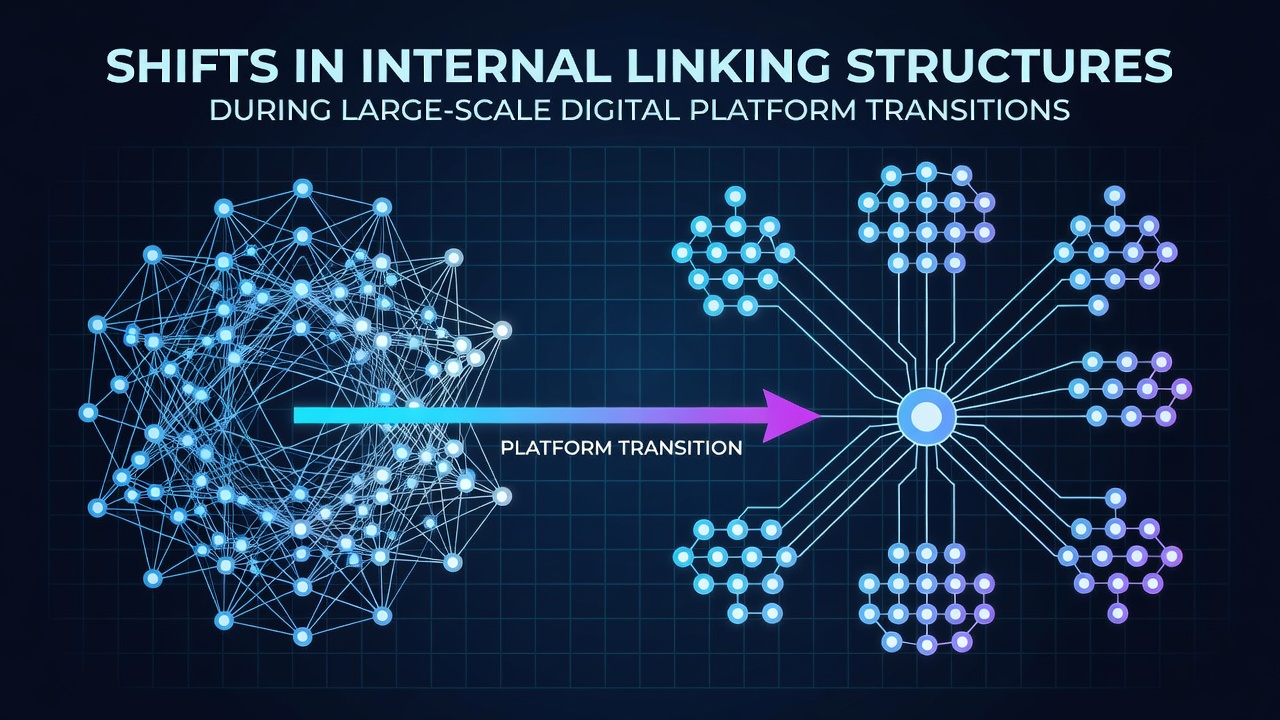
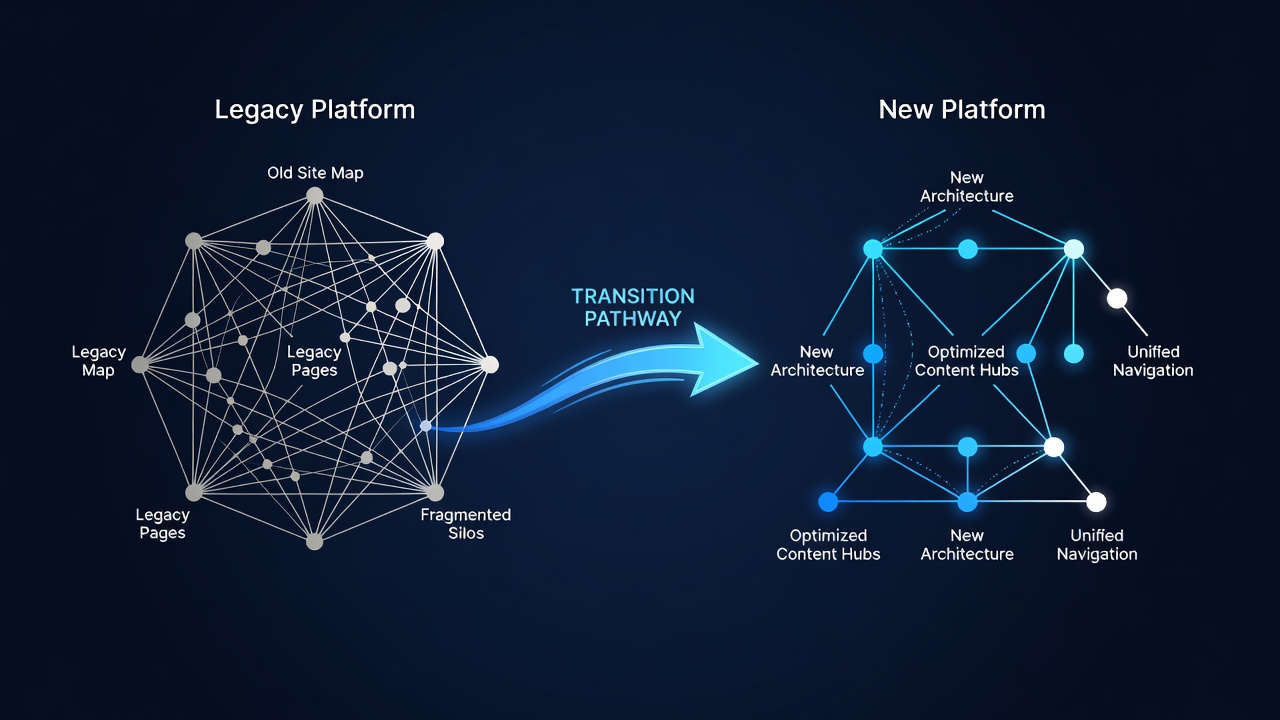
Teams responsible for platform transitions frequently consolidate link equity into hub pages that connect to high-priority sections, while reducing the density of links in legacy footer and sidebar elements that once pointed uniformly across the site. Data shows that this consolidation occurs because new systems support dynamic link generation based on user behavior signals rather than static templates used in older platforms. Observers note that pages previously receiving 50 or more internal links often drop to fewer than 15 after the cutover, whereas key category pages see their inbound internal links increase by 200 percent or more within the first 90 days.
Those who've studied these shifts report that breadcrumb trails and related-content modules receive the most attention during restructuring because they replace older hard-coded navigation that search engines previously followed through thousands of repeated links. In September 2026 several enterprise platforms completed such transitions, and post-migration logs revealed that crawl budget allocation shifted toward pages with updated internal link clusters rather than those relying on pre-migration sitewide navigation.
Effects on Crawl Budget and Indexing Velocity
Internal linking changes directly influence how search engine bots allocate crawl resources during and after platform transitions. When link graphs flatten or centralize around new hubs, bots tend to discover updated content faster while older deep pages may experience temporary drops in crawl frequency until new pathways stabilize. Figures from industry reports reveal that sites implementing phased link migrations maintained steadier indexing rates compared with those that applied wholesale structural changes in a single deployment.
Researchers have tracked cases where platforms introduced contextual inline links within article bodies during transitions, and these additions correlated with improved discovery of long-tail content that previously sat behind multiple click layers. The reality is that such contextual links often replace the volume once provided by category navigation, yet they direct bots along more relevant topical paths that align with the new platform's content taxonomy.
Regional and Sector Variations in Approach
European Commission studies on digital infrastructure updates show that organizations in regulated sectors such as finance and healthcare tend to retain more redundant internal links during transitions to satisfy compliance documentation requirements, whereas media and e-commerce platforms reduce link volume more aggressively to streamline user journeys. Canadian government analyses of public sector website migrations further indicate that internal link updates frequently coincide with accessibility improvements, including expanded use of descriptive anchor text that also benefits search indexing.
Take one research project that examined 47 enterprise migrations completed between 2023 and 2026 and found that platforms using automated link suggestion tools during transition phases achieved more consistent internal link equity distribution than those relying solely on manual audits. The ball remains in the hands of platform architects who must balance legacy link preservation against the need for clean new structures that reflect updated business priorities.
Anchor Text and Link Velocity Adjustments
Anchor text distributions shift noticeably when platforms move to new systems because content teams often standardize phrasing around updated product taxonomies or service categories. Data indicates that exact-match commercial phrases decline in frequency while broader descriptive phrases increase, particularly in platforms transitioning from older blog-style architectures to structured knowledge bases. Link velocity, measured as the rate at which new internal connections appear, spikes during the initial migration window and then stabilizes as teams focus on ongoing content production rather than structural rewiring.
What's interesting is how platforms that staggered their link updates over several months avoided the indexing fluctuations seen in abrupt cutovers, according to logs shared in technical case studies. Those who've managed such projects observe that monitoring internal link velocity through server logs helps identify whether search engines have fully incorporated the new structure before additional content layers are added.
Conclusion
Shifts in internal linking during large-scale platform transitions represent measurable changes in distribution, velocity, and anchor patterns that affect how content gets discovered and indexed. Evidence from multiple regions and sectors demonstrates that organizations adapting link structures in phases while aligning them with new taxonomies experience more stable outcomes than those applying uniform overhauls. Continued monitoring of these metrics remains essential as platforms evolve their architectures in the years ahead.